Pac Cuppers Prepare for Pacific
With just a weekend between now and start week, Pacific Cuppers are working feverishly to prepare their boats for the 2070 mile crossing. Between the gear desired for performance and the gear required for safety, there are literally hundreds of details to attend to on every boat.
Safety First
Safety is paramount in the Pacific Cup, in common with most offshore races. A safety list of over 100 items, from lights on lifejackets to water in your liferaft gets inspected before departure on every boat. "We know this adds to the expense and weight on every boat," says PCYC Commodore and race veteran Bob Hinden, "but these items are literal life savers if needed."
The safety list is published by the United States Sailing Association and adapted by Pacific Cup to suit the particular needs of this, mostly downwind, race.
Performance
It's a race. Our participants have spent months and years preparing themselves, their crews, and their boats to perform best in all anticipated conditions. This starts with assuring that the gear is in good condition, and then the exciting job of selecting the sails that will best suit anticipated conditions. Some specialty sails, like the "blast reacher" designed for wind coming from the beam, or side, of the boat in choppy conditions, may only get used on one or two days, but can get the racer dozens of miles ahead of the competition.
The real payoff comes when the boats reach a point when they can sail deep downwind, and the billowing spinnakers come out to play. These colorful sails capture maximum drive from the wind coming from behind, and it's often important to have several on board, as the delicate fabric may give way even with the best of crews' handling. Once a boat finds itself in sufficient wind and ocean swells, it may begin surfing down the waves for sudden, and welcome, bursts of speed. Skilled drivers can collect wave after wave of surfing "bonus points" on their run to Hawaii.
Experienced racers call this the "E-Ticket Ride." Then of course they have to spend the next fifteen minutes explaining to the younger crew what an E-ticket was.
The Finish
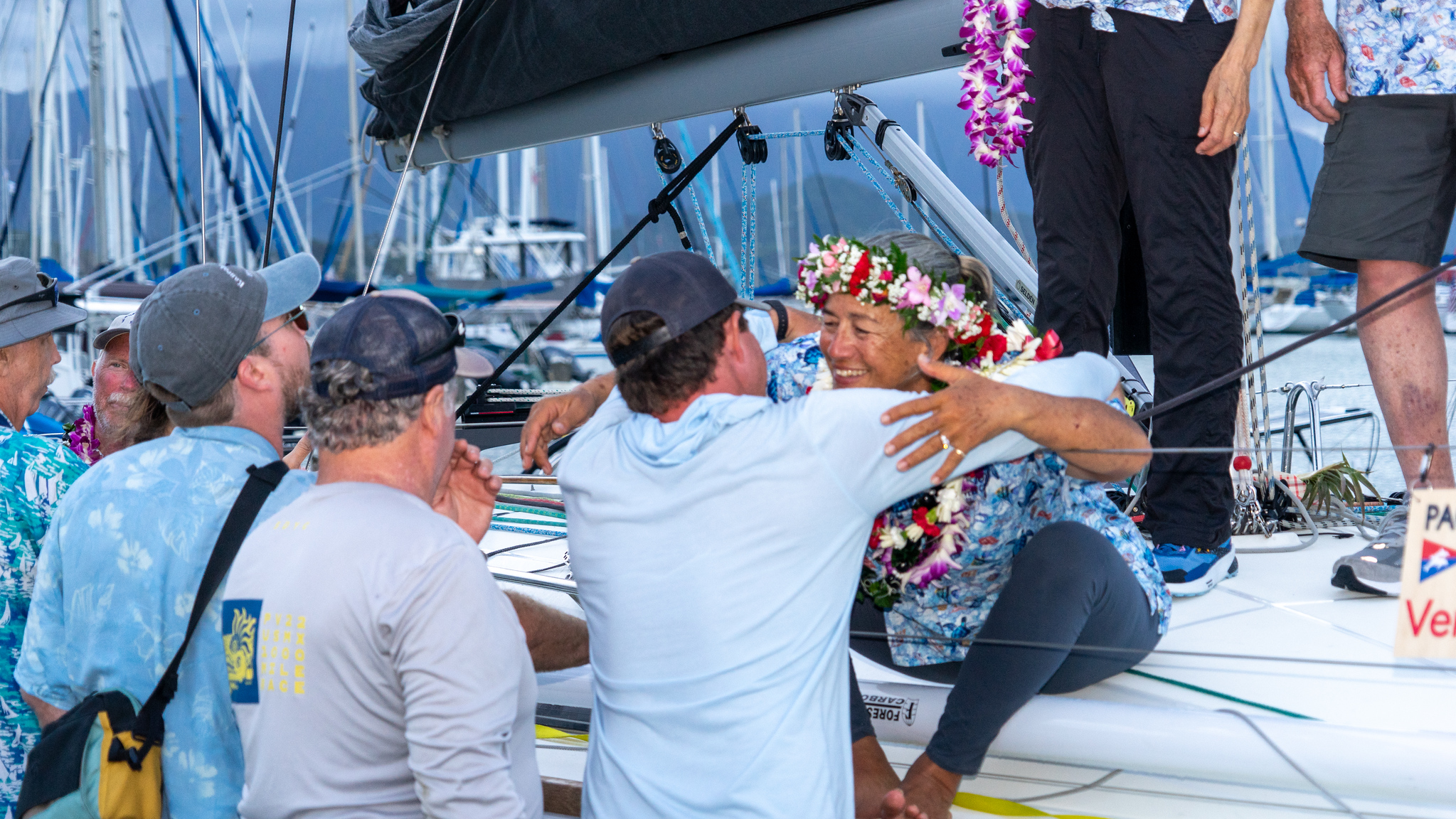
After an amazing two thousand miles, our intrepid crews, salty and tired, will finish, pass through an opening in the fringing reef, and enter the welcoming arms of Kaneohe Bay and the Kaneohe Yacht Club. The hundreds of volunteers there create a welcoming village. As the finishers pull into the docks at the club, they are met first by quick inspections (one for agriculture and one for race safety gear) and then are released to receive leis, pineapple, maitais, and most importantly the affectionate greetings of their friends and families.
Many are already planning the next race.